If you source ingredients for food manufacturing, you already know that not all coconut cream is equal. Fat content drifts between batches. Certifications expire or were never valid to begin with. Suppliers promise short lead times and then disappear when volumes scale. And the end product your customers taste tells the whole story. This guide covers everything a wholesale buyer or food manufacturer needs to know before sourcing organic coconut cream at scale.
What Is Organic Coconut Cream?
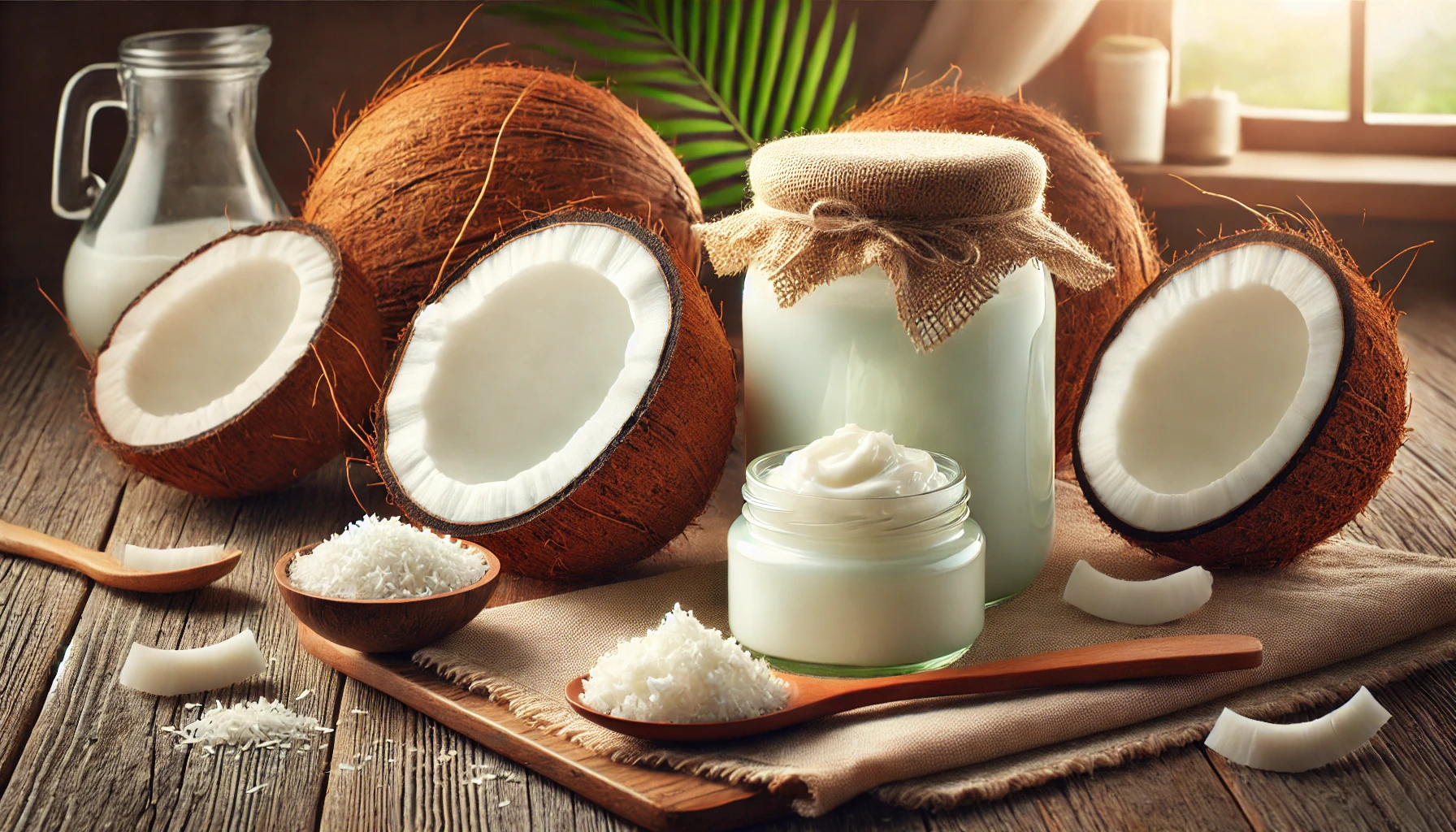
Organic coconut cream is a thick, high-fat liquid extracted from the flesh of mature organic coconuts. The flesh is grated, mixed with water, and pressed to release the liquid. When the water content is lower and the fat content is higher, the result is cream rather than milk.
The key distinction between organic and conventional coconut cream is what goes into the growing process. Organic certification requires that the coconuts are cultivated without synthetic pesticides, artificial fertilisers, or genetically modified inputs. Independent certifying bodies audit the farms, the processing facility, and the supply chain to verify this at every stage.
For food manufacturers, the practical implication is straightforward. Organic coconut cream carries a verifiable certification that you can pass downstream to your retail buyers and end consumers, supporting clean-label claims, vegan positioning, and premium pricing.
Organic vs Conventional: What Buyers Need to Know
Organic coconut cream is produced from farms that meet USDA Organic, EU Organic, or Naturland standards. The certification audit covers the entire supply chain from tree to packaging. Conventional coconut cream carries no such restriction on agricultural inputs and is generally priced lower, but it cannot support organic claims on your finished product.
For manufacturers selling into European retail, US natural food channels, or health-oriented B2B markets, organic certification is not optional. Retailers in these channels require it as a condition of supply.
Fat Content Options and Which One Is Right for Your Application
Organic coconut cream is available in two primary fat content specifications. Choosing the right one depends entirely on what you are manufacturing.
Standard Manufacturing Grade
The most widely used specification. Rich, creamy texture suited to soups, sauces, ready meals, dairy-free ice cream, and plant-based yogurt. Blends smoothly into most formulations.
Premium Confectionery Grade
Used where richness defines the product. Coconut ganaches, caramel bases, chocolate fillings, premium ice cream, and high-fat plant-based creamers all rely on the 30% specification.
If you are unsure which fat content works for your specific application, request a sample of both from your supplier and run a side-by-side trial before committing to a production volume.
Why UHT Processing Matters for Bulk Sourcing
Almost all organic coconut cream supplied for industrial use is UHT processed. UHT stands for Ultra High Temperature. The process heats the cream to between 135 and 150 degrees Celsius for a few seconds, destroying bacteria and microorganisms that would otherwise cause spoilage. The product is then immediately cooled and aseptically filled into sterile packaging in a controlled environment.
Key benefit for importers: A UHT aseptically packed product has an 18-month ambient shelf life. Ocean freight from Sri Lanka to European or North American ports takes three to six weeks. No cold chain is required throughout the entire journey, giving you full flexibility on ordering quantities and inventory management.
For a deeper look at how this process works, visit the UHT coconut milk guide on KAP’s website. The same processing logic applies directly to coconut cream.
Applications Across Food and Beverage Manufacturing
-
Dairy-free and plant-based products The fastest-growing application. Used as the fat base for plant-based ice cream, dairy-free cooking cream, coconut yogurt, and oat and coconut milk blends.
-
Savoury manufacturing Thai curries, Indian gravies, coconut-based soups, and ready meal sauce bases. Manufacturers supplying Asian cuisine ranges to supermarkets use it at significant scale.
-
Confectionery and bakery Chocolate fillings, caramel sauces, coconut macaroons, and cream-based pastry fillings. The 30% fat variant is preferred for maximum density and richness.
-
Premium beverages Coconut lattes, smoothie bases, functional drinks, and nutritional shakes. Pairs particularly well with cacao, vanilla, and matcha formulations.
-
Infant nutrition and baby food A smaller but growing application for coconut-infused formulations where natural fat and nutritional profile supports product development without synthetic additives.
Certifications to Require From Your Supplier
Certifications are not marketing. For B2B buyers, they are the primary method of verifying that a supplier’s product meets the standards your own customers and retail partners require.
- BRCGS AA Grade — Highest GFSI food safety rating. Zero critical non-conformances. Required by major UK and EU retailers.
- USDA Organic — Required for organic claims in the United States market.
- EU Organic — Required for organic claims in the European Union market.
- Naturland — Exceeds minimum EU thresholds. Strong credibility in Germany, Switzerland, and Austria. Covers biodiversity and social standards.
- Halal and Kosher — Opens Middle Eastern and Jewish distribution channels. Used as a quality signal by mainstream consumers.
- Vegan (V-Label) — Verifies no animal-derived substances were used at any stage of processing.
KAP holds all of the above certifications among a portfolio of 12. A single supplier relationship covers compliance requirements across multiple markets simultaneously.
Why Sri Lanka Is the Right Origin
Sri Lanka’s Coconut Triangle region produces coconuts in a climate and soil environment that has supported cultivation for centuries. The combination of tropical rainfall, humidity, and mineral-rich soil produces coconuts with a naturally high oil content and rich, flavourful flesh. This raw material quality directly translates into finished product performance.
Sri Lanka is also one of the few countries in the world where USDA Organic, EU Organic, Naturland, Fairtrade, and BRCGS AA can all be obtained from a single manufacturer. Learn more about coconut product exporters in Sri Lanka and what sets the country apart from other producing origins.
What to Look for in a Supplier
- Batch consistency — Ask for technical datasheets covering fat content, pH, viscosity, and microbial count across multiple recent production batches.
- Homogenisation — Prevents fat separation throughout the shelf life. Essential for dosing accuracy in high-speed production environments.
- Lead time visibility — A supplier who maintains forward visibility on raw material stocks gives you earlier warnings of potential constraints.
- Communication responsiveness — If a supplier takes days to respond during pre-qualification, that pattern will not improve once a contract is signed.
- Private labelling capability — Flexible MOQs allow you to test market demand before committing to full-scale volumes.
Organic Coconut Cream vs Organic Coconut Milk
B2B buyers new to coconut ingredients sometimes use these terms interchangeably. They are different products with different applications.
| Organic Coconut Milk | Organic Coconut Cream | |
|---|---|---|
| Fat Content | 18% | 24% to 30% |
| Consistency | Fluid, pourable | Thick, rich |
| Flavour Intensity | Subtle | Pronounced |
| Best For | Soups, sauces, beverages | Desserts, confectionery, ice cream |
| Interchangeable? | Not in most manufacturing formulations | |
Sourcing Organic Coconut Cream From KAP
KAP (Kandetiya Agro Products Pvt Ltd) is one of Sri Lanka’s most established coconut product exporters, with over six decades of production experience and more than 30,000 metric tonnes exported annually to clients across Asia, Europe, North America, and the Middle East.
KAP’s organic coconut cream is available in 24% and 30% fat variants, both UHT processed and aseptically packed for a stable 18-month shelf life. Available packaging formats: Tetra Brik Aseptic Slim with Resealable Closure 1000ml, Tetra Prisma Square with Resealable Closure 1000ml, Tetra Brik Slim 200ml, Tetra Brik Base 200ml, and Tetra Brik Base 250ml.
Certifications held: BRCGS AA, USDA Organic, EU Organic, Naturland, ISO 22000, Fairtrade, Fair for Life, Halal, Kosher (Star-K), Vegan (V-Label), Global G.A.P, and Sedex.
Explore the full KAP product range: coconut milk, UHT coconut milk, aseptic coconut milk, aseptic coconut cream, UHT coconut cream, and organic coconut milk.
Ready to request samples or a quote?
Contact the KAP sales team at sales@kaplk.com or call +94 74 361 9618.
Further Reading and External Resources
Frequently Asked Questions
What is the fat content of organic coconut cream?
Organic coconut cream is available in 24% and 30% fat content. The 24% variant is used in most food manufacturing applications including soups, sauces, ice cream, and plant-based products. The 30% variant is preferred for confectionery, high-fat creamers, and premium dessert applications.
How long does organic coconut cream last?
UHT processed organic coconut cream packed aseptically has an 18-month shelf life at ambient temperature. Once opened, it should be refrigerated and used within 72 hours.
What certifications should an organic coconut cream supplier hold?
The most important are BRCGS AA for food safety, USDA Organic for US markets, EU Organic for European markets, Halal, and Kosher. Naturland is an additional indicator of premium organic standards. Learn more at brcgs.com.
What is the difference between organic coconut cream and organic coconut milk?
The primary difference is fat content. Organic coconut cream contains 24% to 30% fat and is thick and rich. Organic coconut milk contains around 18% fat and is lighter and more fluid. They are not interchangeable in most manufacturing formulations.
Can organic coconut cream be private labelled?
Yes. KAP offers private labelling across five Tetra Pak formats including 200ml, 250ml, and 1000ml options. KAP’s organic certification can support the organic claims on your own label, subject to compliance documentation requirements.
Why is Sri Lanka a preferred source for organic coconut cream?
Sri Lanka produces coconuts in ideal growing conditions and has an established export infrastructure with deep familiarity with UK, EU, USA, and Middle East regulatory requirements. Leading Sri Lankan manufacturers hold BRCGS AA, USDA Organic, EU Organic, Naturland, Halal, Kosher, and Fairtrade certification simultaneously, which simplifies supplier qualification for international buyers.
Experts on Sri Lankan Coconut Products.