
If you have spent any time researching coconut milk for manufacturing or wholesale purposes, you have almost certainly come across the term UHT. It appears on product specification sheets, export documents, and supplier websites with enough frequency that it is easy to assume everyone already knows what it means. But the distinction between UHT coconut milk and other forms of preserved coconut milk is genuinely important, particularly for anyone making sourcing decisions at scale.
This article explains what UHT processing actually involves, why it matters for food businesses, and what advantages it offers compared to alternative preservation methods.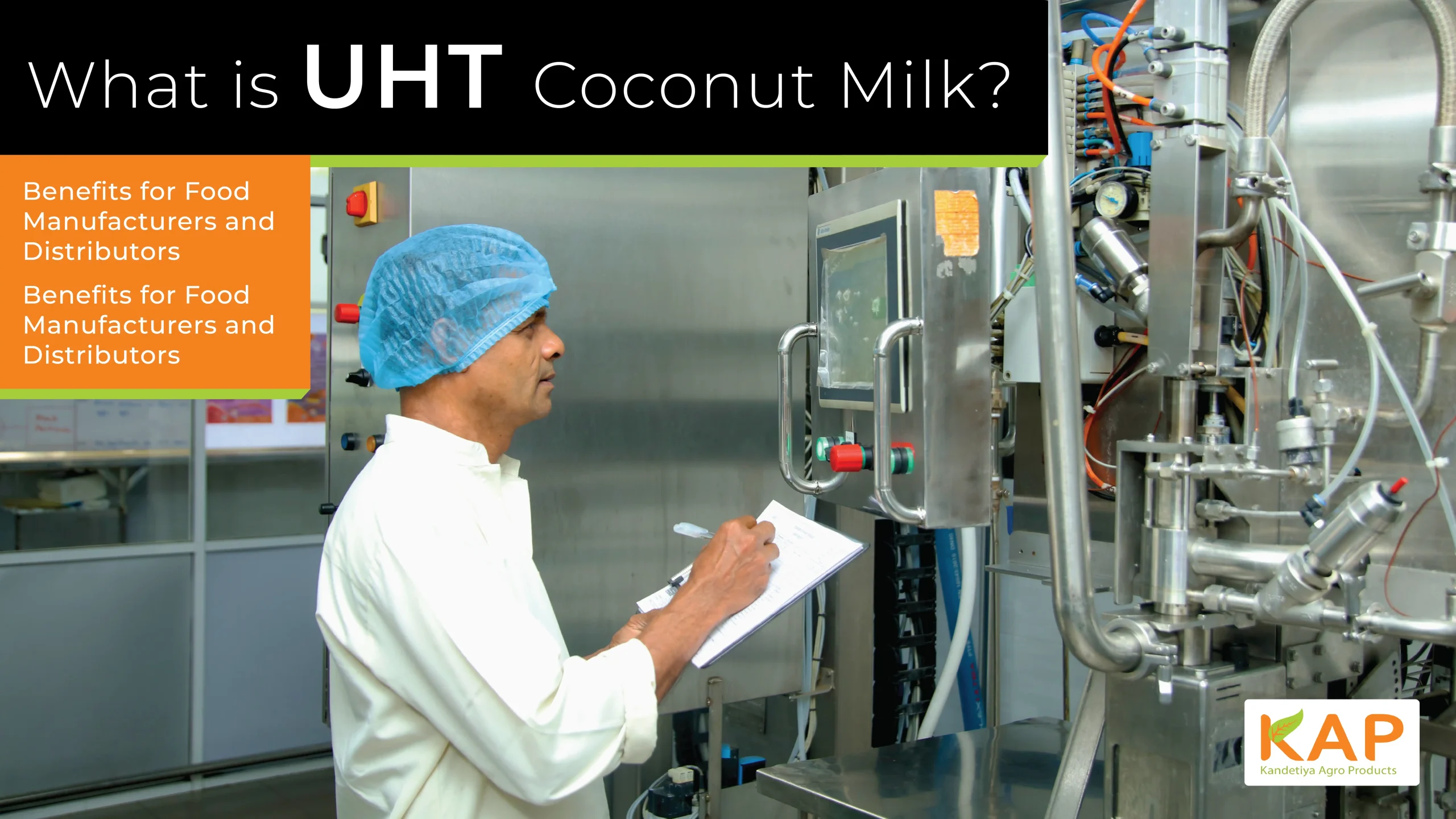
The Science Behind UHT Processing
UHT stands for Ultra High Temperature. The process involves heating coconut milk to temperatures typically between 135 and 150 degrees Celsius for a very brief period, usually just a few seconds. This extreme but short exposure to heat is sufficient to destroy virtually all bacteria, moulds, and yeasts that could otherwise cause spoilage or pose a health risk to consumers.
Immediately after heating, the coconut milk is cooled rapidly and transferred into sterile packaging in a controlled environment. This aseptic packaging process ensures that no new contaminants are introduced after processing. The result is a product that is commercially sterile and can be stored at ambient temperature for up to 18 months without any loss of safety.
How It Differs from Standard Pasteurisation
Standard pasteurisation also uses heat to reduce microbial load, but it operates at lower temperatures for longer periods. While pasteurisation extends shelf life beyond raw coconut milk, pasteurised products still require refrigeration throughout the supply chain. This has significant practical implications for manufacturers who import from overseas suppliers or distribute across multiple markets.
UHT coconut milk removes the cold chain requirement entirely, at least until the package is opened. This makes it far easier to ship, store, and distribute across long distances without specialised refrigerated logistics, which reduces both cost and complexity for importers and distributors.
Consistency Is a Key Manufacturing Advantage
One of the underappreciated benefits of UHT processing is its contribution to product consistency. The process is tightly controlled and leaves very little room for variation in the final product. When you source UHT coconut milk from a reputable manufacturer, you can expect the fat content, viscosity, colour, and flavour profile to remain stable from one batch to the next. For food manufacturers who rely on precise ingredient performance in their recipes, this consistency is enormously valuable.
Whether you are producing ice cream, ready-to-drink beverages, curry sauces, yogurt, or infant formula, having a coconut milk ingredient that behaves predictably every time you use it reduces waste, minimises reformulation costs, and protects the quality of your finished product.
Shelf Life Benefits for Global Trade
For businesses that source ingredients internationally, shelf life is a critical factor. Ocean freight from Sri Lanka to Europe or North America typically takes between three and six weeks. Add to that the time spent in customs clearance and warehouse storage before the product reaches your production facility, and you are already looking at a meaningful portion of a perishable product’s usable life.
UHT coconut milk with an 18-month shelf life gives you the flexibility to order in larger quantities, benefit from bulk pricing, and manage inventory without the pressure of imminent expiration. This is especially useful for businesses that experience seasonal fluctuations in demand.
Applications Across Food Categories
The versatility of UHT coconut milk makes it a widely used ingredient across a broad range of food and beverage categories. In the dairy alternatives space, it serves as a base for plant-based milks, creamers, and drinking yogurts. In confectionery, it contributes richness and fat content to chocolates, ice creams, and caramel products. In savoury applications, it is used in soups, sauces, and ready meal bases across Asian, Caribbean, and South American cuisine styles.
Manufacturers producing baby food and infant nutrition products are also significant users of UHT coconut milk, particularly the variety infused with coconut water, which delivers a naturally enhanced nutritional profile without artificial additives.
What to Look for in a UHT Coconut Milk Supplier
Not all UHT coconut milk is produced to the same standard. When evaluating suppliers, check that the processing equipment meets modern hygiene standards, that the aseptic filling line is maintained and validated regularly, and that the supplier can provide batch-level documentation confirming microbial testing results. Certifications like BRCGS AA and ISO 22000 are strong indicators that the right systems are in place.
Fat content specification is another important variable. Depending on your application, you may need coconut milk with 18% fat, coconut cream with 24% or 30% fat, or a diluted variant for lighter applications. A supplier who can offer multiple fat content options from a single facility simplifies your procurement process considerably.
UHT coconut milk is one of the most practical and commercially reliable ingredients available to food manufacturers today. Understanding how it works and what to look for in a supplier gives you a significant advantage in building a resilient and high-quality supply chain.
