If you have spent any time evaluating coconut product suppliers, you have probably encountered the term BRCGS AA. It appears in supplier credentials, on factory audit reports, and in procurement specifications from major retailers and food service operators. Despite its widespread use, the certification is not always well understood by buyers, particularly those who are newer to sourcing ingredients from international manufacturers.
This article explains what BRCGS AA certification actually means, how it is obtained, and why it matters when you are making decisions about which coconut product supplier to trust with your supply chain.
What BRCGS Stands For
BRCGS stands for Brand Reputation Compliance Global Standards. It is an international standards body that develops and manages food safety, packaging, and consumer product standards used by manufacturers and their supply chains around the world. The BRCGS Global Food Safety Standard is one of the most widely recognised and respected food safety frameworks in the industry, and it is recognised as a Global Food Safety Initiative benchmarked scheme, which means it is accepted as equivalent to other major food safety certification programmes.
The standard was originally developed by the British Retail Consortium to give UK retailers confidence in the safety of the products supplied to them. It has since expanded into a truly global standard, with certified manufacturers in over 130 countries supplying products to retailers and food service operations worldwide.
What the AA Grade Means
BRCGS audits result in one of several possible grades depending on the number and severity of non-conformances found during the assessment. The grades range from AA at the top down through A, B, C, and D, with manufacturers who fail to meet minimum standards receiving no grade at all.
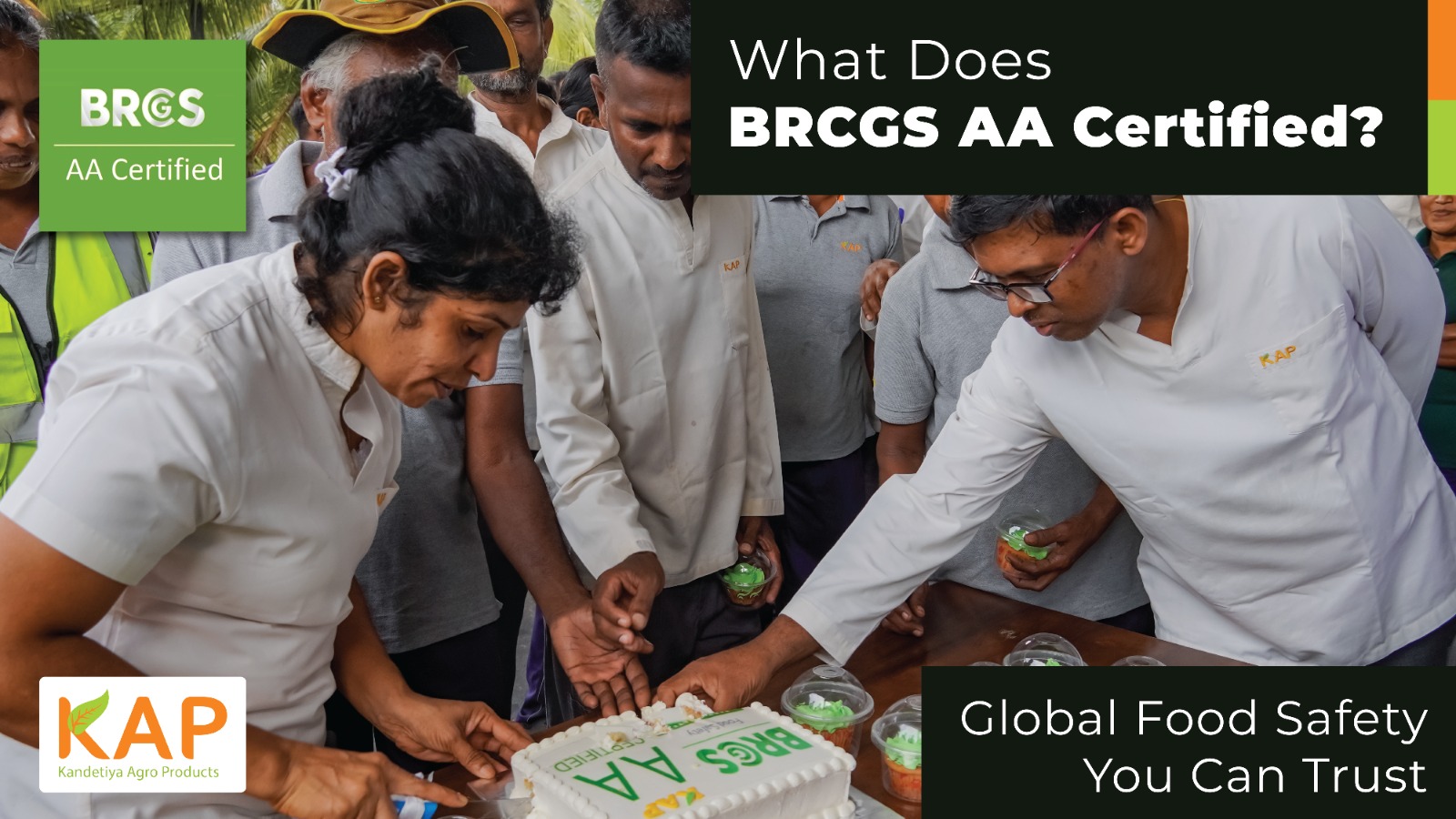
The AA grade is awarded only to manufacturers who pass a planned audit, meaning an audit that was scheduled in advance rather than conducted as an unannounced visit, with zero critical non-conformances and fewer than five minor non-conformances. In practical terms, this means that a BRCGS AA certified manufacturer has demonstrated that their food safety management systems, hygiene standards, and quality control processes are operating at an exceptionally high level across their entire operation.
What Gets Assessed During a BRCGS Audit
A BRCGS audit is comprehensive and covers a wide range of areas within a food manufacturing operation. Auditors assess the facility’s food safety management systems, raw material controls, production environment hygiene, pest control programmes, allergen management procedures, traceability systems, and staff training records, among many other areas.
The audit also includes a physical inspection of the factory floor, storage areas, and packaging facilities. Auditors are looking not just for documented procedures but for evidence that those procedures are actually being followed in day-to-day operations. A high BRCGS grade therefore reflects real operational excellence, not just good paperwork.
Why It Matters for Coconut Product Buyers
For businesses sourcing coconut products from overseas manufacturers, the BRCGS AA grade provides a level of assurance that is difficult to obtain through other means. Conducting your own factory audit of a supplier in Sri Lanka or another producing country requires significant time, cost, and expertise. Relying on a BRCGS audit conducted by a trained and accredited auditor gives you independent verification that the supplier meets international food safety standards.
Many major retailers, particularly in the UK and Europe, require their suppliers to hold BRCGS certification as a condition of supply. If you are selling to these channels or aspire to do so, sourcing from a BRCGS AA certified manufacturer means your own supplier audit process is considerably simpler and your exposure to supply chain risk is meaningfully reduced.
The Difference Between Planned and Unannounced Audits
BRCGS offers both planned and unannounced audit options. In a planned audit, the manufacturer knows the date of the assessment in advance and has time to ensure that everything is in order before the auditor arrives. In an unannounced audit, the auditor arrives without prior notice, which is a more stringent test of whether good practices are maintained consistently rather than just on audit day.
The AA grade is the highest grade available under a planned audit. For an unannounced audit, the equivalent top grade is also AA. Some buyers specifically seek suppliers who have opted into the unannounced audit programme, as it provides additional assurance that the manufacturer’s standards are consistently maintained rather than temporarily elevated around audit time.
Using Certifications as Part of Your Sourcing Framework
BRCGS AA certification should be one element of a broader supplier evaluation process rather than the only criterion you use. It tells you a great deal about food safety management, but it does not directly address commercial reliability, communication responsiveness, or the supplier’s ability to meet your specific product and packaging requirements.
Use BRCGS certification as a baseline qualifier. Suppliers who cannot demonstrate it should prompt serious questions about their standards. Among those who do hold it, the other factors that distinguish the best partners are consistent product quality, transparent communication, flexibility in order quantities, and a genuine understanding of the markets you serve.
