
Sustainability has become one of the most important considerations in food sourcing decisions, and for good reason. The way ingredients are grown, processed, and transported has real consequences for the natural environment, for the communities that produce them, and ultimately for the long-term viability of the supply chains that food businesses depend on. Certified organic coconut products sit at an interesting intersection of consumer preference, environmental benefit, and commercial opportunity.
This article looks honestly at what organic certification means in the coconut sector, what environmental benefits it genuinely delivers, and why it is increasingly worth considering as part of a responsible sourcing strategy.
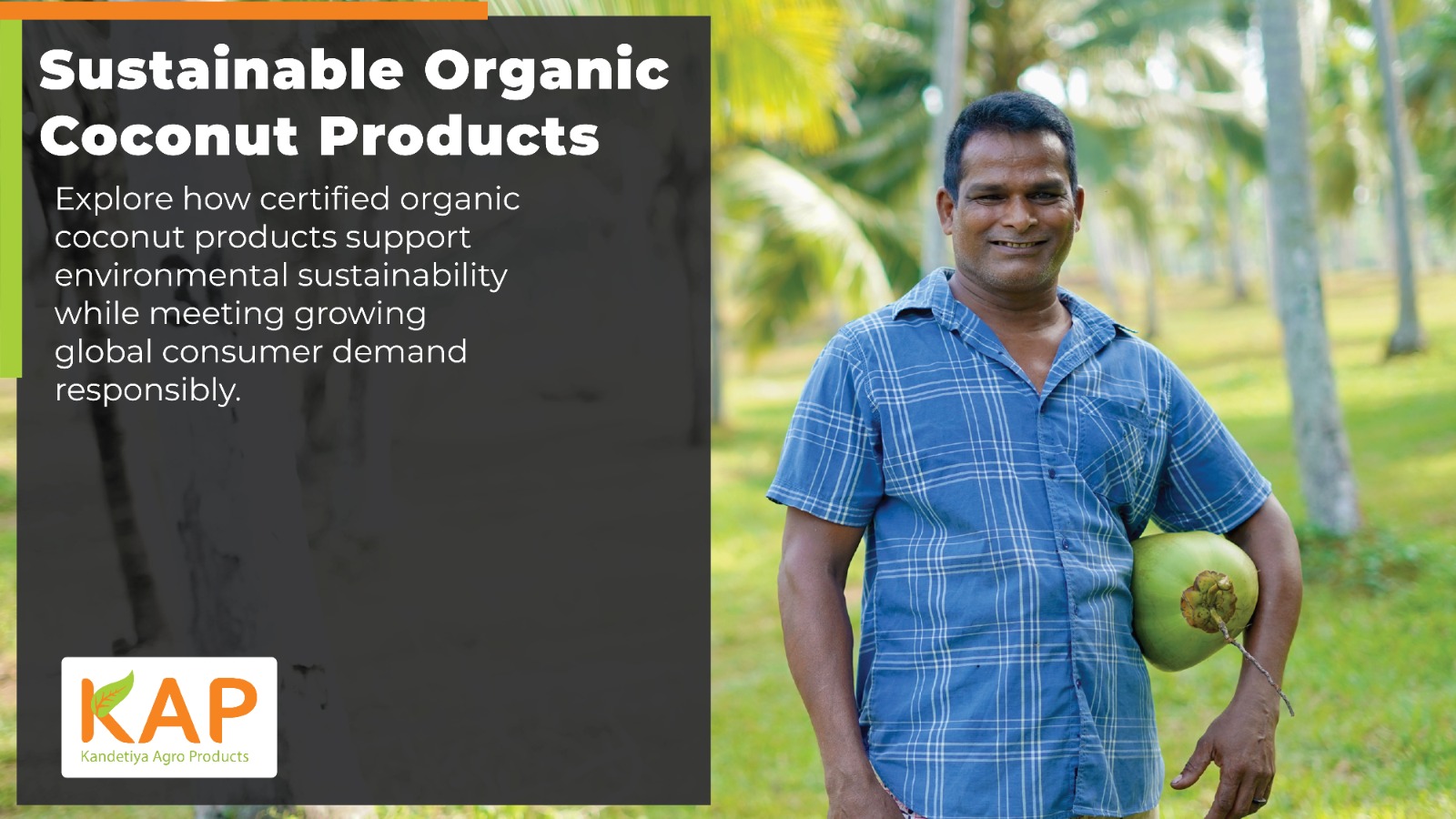
What Organic Certification Covers in Coconut Farming
Organic certification for coconut products begins at the farm level. To produce coconuts that can be certified organic under standards like USDA Organic, EU Organic, or Naturland, farmers must cultivate their trees without the use of synthetic pesticides, synthetic herbicides, or synthetic fertilisers. Instead, they rely on natural soil amendments, biological pest management, and crop rotation practices that maintain soil health without introducing synthetic chemicals into the ecosystem.
This approach to farming has several direct environmental benefits. It protects the soil microbiology that underpins long-term agricultural productivity. It reduces chemical runoff into nearby waterways. It supports a more diverse insect and bird population in and around the farm by not exposing them to the broad-spectrum toxicity of synthetic pesticides. And it typically results in lower overall chemical input into the wider environment.
Soil Health and Long-Term Agricultural Sustainability
One of the most significant but least discussed environmental benefits of organic coconut farming is its positive effect on soil health. Synthetic fertilisers, while effective at delivering nutrients quickly, can over time degrade soil structure, reduce microbial diversity, and contribute to soil acidification. Organic farming practices, by contrast, actively build soil organic matter through composting, green manure, and the use of natural soil amendments.
Healthy soil is the foundation of productive agriculture. Coconut palms that grow in biologically rich, well-structured soil tend to be more resilient to climate stress, including the increasingly frequent periods of drought and unusual rainfall that coconut-growing regions experience as a result of climate change. Protecting soil health through organic practices is therefore not just an environmental good but a practical measure for maintaining long-term crop yields.
Reduced Synthetic Chemical Load on Ecosystems
Sri Lanka’s coconut-growing regions are home to a rich variety of wildlife and natural ecosystems, including wetlands, river systems, and forest patches that support significant biodiversity. Conventional agriculture that uses synthetic pesticides and herbicides poses a documented threat to many of these species, particularly pollinators, aquatic organisms, and soil-dwelling invertebrates.
Organic farming eliminates this synthetic chemical load from the production system. While no form of agriculture is entirely without environmental impact, the shift from synthetic to natural inputs genuinely reduces the pressure placed on surrounding ecosystems. For buyers who need to demonstrate responsible sourcing to sustainability-minded retailers or consumers, organic certification from a credible certifier provides third-party verification that these practices are actually being followed.
The Carbon Footprint Dimension
Synthetic fertiliser production is an energy-intensive industrial process that generates significant greenhouse gas emissions. By eliminating synthetic fertiliser use, organic coconut farming reduces the upstream carbon footprint associated with input production. This is a genuine though often unquantified environmental benefit that contributes to the lower overall carbon intensity of organic supply chains.
Some leading coconut product manufacturers have gone further than organic certification in their environmental commitments, investing in renewable energy for their processing facilities, implementing reforestation programmes to offset emissions, and measuring and reporting their carbon footprint transparently. For buyers who are under pressure to reduce their own Scope 3 emissions, partnering with manufacturers who take a comprehensive approach to carbon management is increasingly valuable.
Fairtrade and the Social Dimension of Sustainability
Environmental sustainability and social sustainability are closely linked in agricultural supply chains. Fairtrade certification, which is held by some of the most responsible coconut product manufacturers, ensures that farmers receive a guaranteed minimum price for their produce that covers the cost of sustainable production, plus a Fairtrade premium that is invested in community development projects.
This social dimension of sustainability matters environmentally because farmers who receive fair economic returns are better able to invest in their land and maintain good agricultural practices over time. When economic pressure forces farmers to cut corners on soil management or pursue short-term yield maximisation at the expense of long-term land health, environmental outcomes suffer. Fair economic conditions support better environmental stewardship.
Naturland Certification and What It Adds
Naturland is one of the world’s oldest and most respected organic certification organisations, and its standards in some areas exceed those of the USDA and EU Organic programmes. Naturland certification covers not just the absence of synthetic inputs but also positive requirements for soil conservation, biodiversity, animal welfare where relevant, and social standards for farm workers.
For buyers who want to source from manufacturers whose organic commitment goes beyond the minimum regulatory threshold, Naturland certification is a meaningful additional indicator. It represents a deeper commitment to sustainable agriculture rather than a compliance exercise.
Making the Business Case for Organic Sourcing
The environmental benefits of organic coconut products are real and meaningful, but they are not the only reason to consider them in your sourcing strategy. Organic certified products command a price premium that protects margins in a competitive market. They open distribution channels, particularly in health food retail and premium supermarkets, that are less accessible to conventional products. And they provide a stronger sustainability story that increasingly influences retailer sourcing decisions.
The businesses that will be best positioned in the coconut products market over the next decade are those who are building supply chains that are not just cost-efficient today but resilient, certified, and aligned with the direction that consumer expectations and retail requirements are clearly moving. Certified organic sourcing is one of the most practical steps toward that position.
