
Desiccated coconut is one of those ingredients that appears in so many different food products that it is easy to treat as a single, uniform commodity. In reality, desiccated coconut is available in a range of distinct grades, each with different physical characteristics that make it suited to some applications and less suited to others. Understanding these differences is essential for food manufacturers, bakers, and confectioners who want to source the right product for their specific needs.
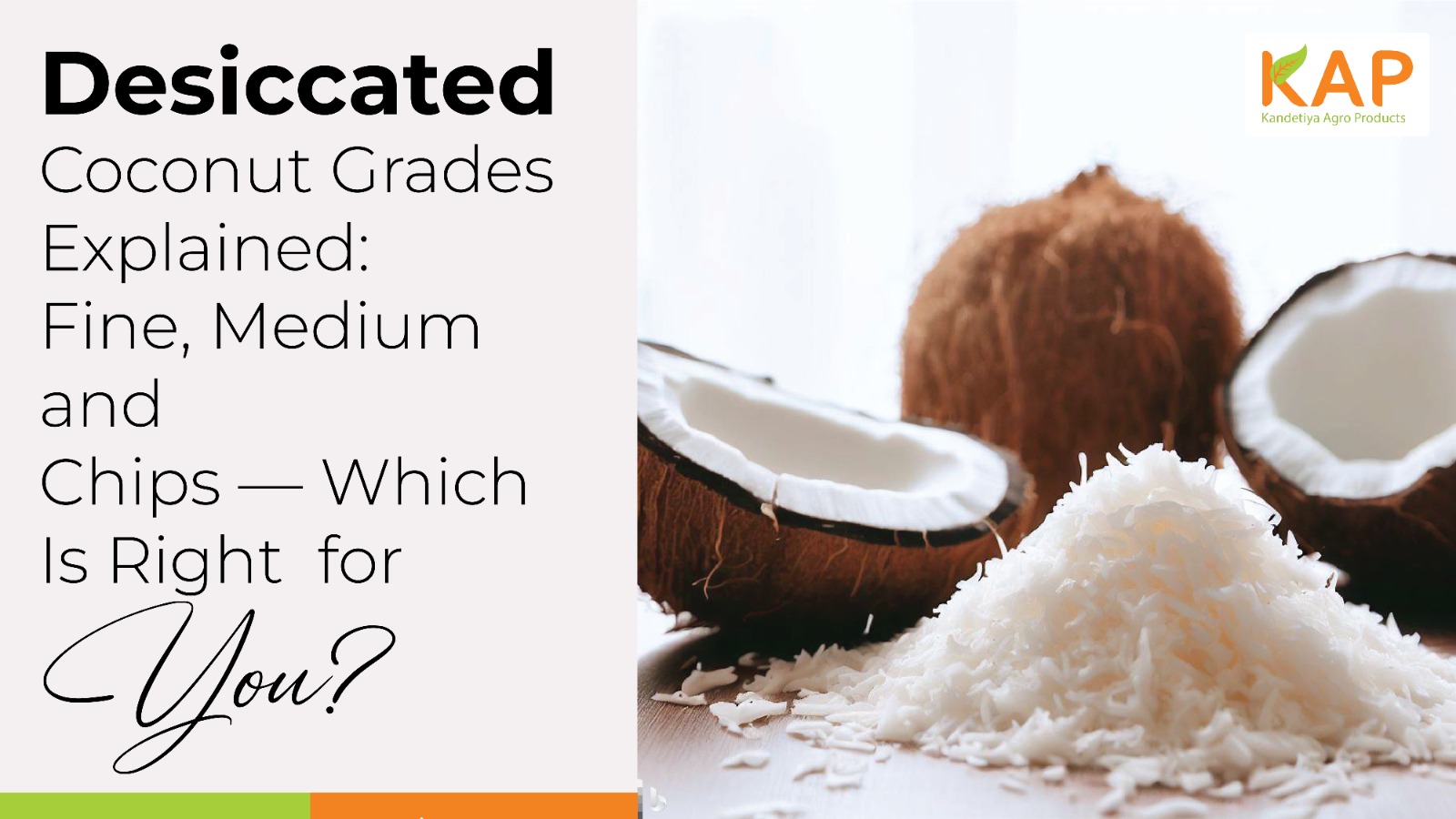
What Desiccated Coconut Actually Is
Desiccated coconut is produced by shredding or grinding the white flesh of mature coconuts and then carefully removing most of the moisture through a controlled drying process. The result is a dry, shelf-stable product with an intense coconut aroma and flavour, a high fat content, and a texture that varies depending on the grade and how finely the coconut has been processed.
Quality desiccated coconut contains no added sugar, no artificial preservatives, and no artificial flavourings. What you are buying is essentially dehydrated coconut flesh in its purest form, which is why raw material quality and processing hygiene are so important when choosing a supplier.
Fine Grade Desiccated Coconut
Fine grade desiccated coconut has the smallest particle size of all the standard grades. The shreds are short and very thin, giving the product an almost powdery appearance when dry, though it retains some texture. Fine grade disperses easily and blends smoothly into batters, doughs, and fillings, making it the preferred choice for applications where you want coconut flavour and fat content without pronounced texture.
Biscuit and cookie manufacturers often favour fine grade for this reason, as do producers of coconut-flavoured coatings, cream fillings, and blended snack mixes. Fine grade is also widely used in confectionery applications where a smooth, even distribution of coconut throughout the product is more important than visual impact.
Medium Grade Desiccated Coconut
Medium grade sits between fine and chips in terms of particle size, offering longer shreds with more visible texture. It is probably the most versatile of all the grades because it works well across a broader range of applications without the extreme characteristics of the finest or coarsest options.
Cake manufacturers, muesli and granola producers, and snack bar makers frequently use medium grade because it provides a pleasant chew and visible coconut presence without dominating the texture of the finished product. It also performs well in coatings for chocolate bars and confectionery pieces, where both appearance and texture matter.
Chips Grade Desiccated Coconut
Chips are the largest and most texturally pronounced format of desiccated coconut. They are cut into larger, irregular pieces rather than shredded, which means they retain a more substantial bite and create a visually striking appearance in finished products. Chips are ideal for applications where you want coconut to be a noticeable and identifiable ingredient rather than a background note.
Artisan granola and trail mix producers love coconut chips for the textural contrast they provide. They are also used decoratively on top of cakes, tarts, and pastries, and in premium chocolate products where large visible inclusions are part of the premium positioning. Because of their size, chips take slightly longer to rehydrate when used in moist applications, which can be either an advantage or a consideration depending on your recipe.
Other Specialist Grades
Beyond the three standard grades, some manufacturers also produce long-thread desiccated coconut, which features long, fine strands rather than shredded particles. Long thread is particularly popular in the Middle East and South Asia for traditional sweet applications, and it has found growing popularity in Western markets for decorative use on celebration cakes and confectionery.
Toasted desiccated coconut is another variant that has grown in popularity alongside the rise of premium and artisan food products. The toasting process deepens the colour and intensifies the nutty, caramelised notes of the coconut, making it a distinctive flavour-forward ingredient for products where a more complex coconut character is desirable.
Choosing the Right Grade for Your Application
The decision about which grade to use comes down to three main factors: the texture you want in the finished product, the visual appearance you are targeting, and how the coconut will interact with other ingredients during processing. If you are unsure, the most practical approach is to request samples of multiple grades from your supplier and run small-scale trials before committing to a full production run.
A good supplier will be happy to provide samples and technical guidance. They should also be able to advise on fat content, moisture specifications, and shelf life for each grade, as these parameters vary and may be relevant depending on your production process and packaging requirements.
Getting the grade right from the start saves reformulation costs and ensures that the coconut in your product performs exactly as intended every time.
